A forest production is decided long before the first rehearsal — by where the audience sits, where the rain goes, and how much sky the actors have to compete with. Three formats come up again and again when a company chooses to perform among trees: the tent, the open-air stage, and the platform built into the canopy. They are not simply three price points. Each one shapes the acoustics, the schedule and the kind of attention an audience brings to the work. What follows is a working comparison, built around the questions that actually come up on site: what it costs, what it protects against, how it sounds, how long it takes to build, and what the audience sees when the lights come up.
The Tent Stage: A Roof, Four Walls and a Weather Alibi
A tent is the only one of the three that lets you say, honestly, that the show will happen. That certainty is what you are paying for, and it is worth naming out loud during planning meetings, because it changes everything downstream: ticket policy, crew hours, the mood of the company on a wet Tuesday.
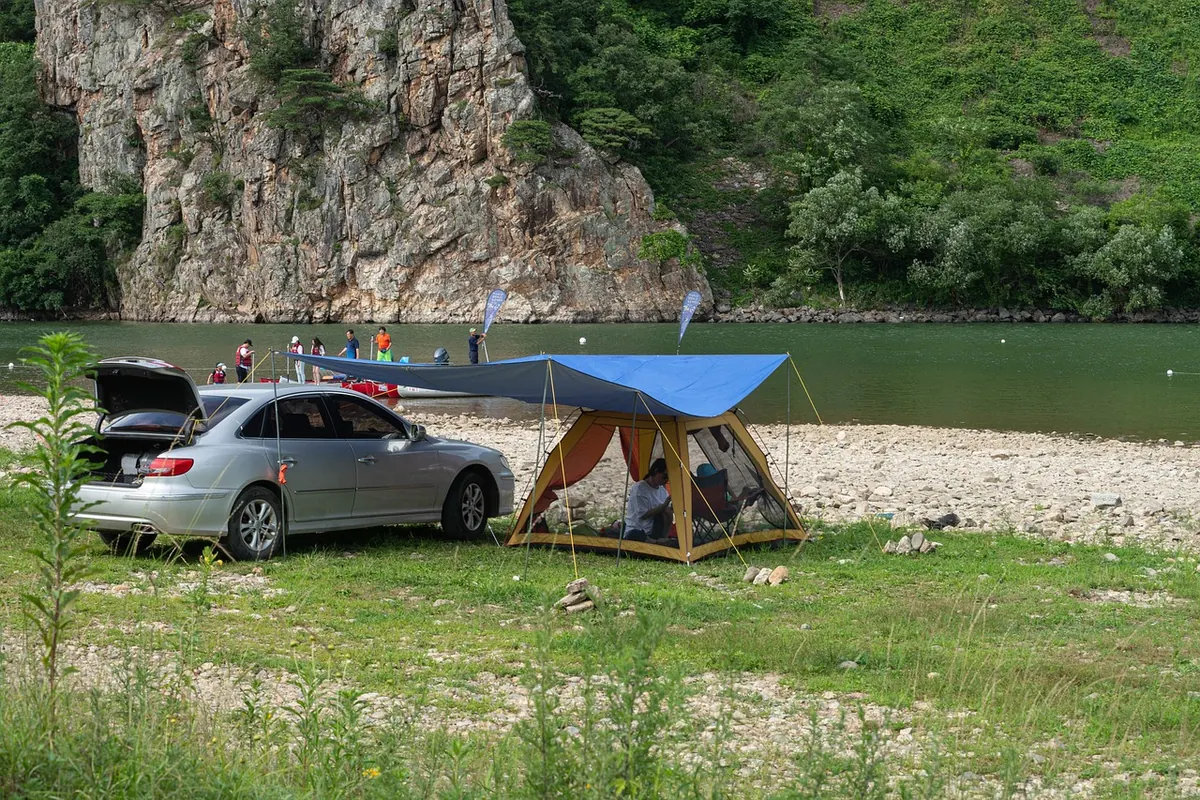
The format covers a wide range. At one end sits a stretch tent or open-sided marquee, which gives you a roof and little else. At the other is a full enclosed structure with a raised floor, proper seating and a backstage area. Costs climb steeply with footprint, floor, seating, heating and the fire-safety measures your local authority will require, so get those requirements in writing early rather than discovering them in the final week.
Acoustically, a tent is the most controllable of the three. An enclosed fabric structure gives you a contained chamber where unamplified voices carry well and where you can place speakers predictably. The catch is noise from above: heavy rain on a canvas roof is loud enough to stop a scene, and wind flapping in the guy ropes is a constant low percussion. Choose a tensioned frame over a loose one, and brief your sound designer on rain before you brief them on anything else.
Visually, the tent is the format that most easily forgets it is in a forest. The walls become the world, and the trees turn into scenery outside the window. Open the sides where you can, and light the trunks beyond the threshold — a few uplights on nearby trees will do more for atmosphere than any backdrop.
The Open-Air Stage: Sky Above, Forest Behind
Here the forest does the design work. A simple deck, a clearing with a natural slope, a backstage screen of hurdles or canvas, and you have a theatre. This is the cheapest format to build and the most expensive to lose: there is no roof, so weather is not managed, it is survived.
Plan for it properly. Have a rain hold written into the schedule, a covered place for the audience to wait, and a decision point — a specific time — at which the show is cancelled rather than delayed. Wind deserves more respect than rain: it stresses set pieces, makes lighting rigs and hanging cloths risky, and can turn a lightweight prop into a projectile. Ground under seating gets damp and soft even on a dry evening, so put down matting or boardwalk.
Sound is the real challenge. Outdoors, voices travel upward and sideways and simply leave. The remedies are practical rather than technical: use a natural bowl if the site offers one, place hard reflective surfaces behind the playing area, keep the band low and to the side, and aim any amplification at the audience rather than at the trees. Leaves absorb high frequencies, which softens consonants, so ask actors to slow down slightly and articulate more than feels natural in the rehearsal room.
Setup is fast — often a day or two for a modest deck — which makes open-air stages ideal for touring, for short runs, and for sites where vehicle access is limited or forbidden.
The Tree-Canopy Stage: Performing Inside the Canopy
No other format produces the same image: an audience seated below, the action threaded through branches, light moving through leaves. It is also the format with the longest lead time and the highest engineering burden.
Nothing is attached to a tree without professional advice. A qualified arborist should assess the trees for health and load-bearing capacity, and a structural engineer or certified rigger should design and install the platform. Use slings and padded straps rather than anything driven into bark, spread loads across several anchor points, and allow the trees room to move. Check insurance cover and any site permissions before designs are drawn, and confirm requirements with your local authority — tree protection rules and public assembly regulations vary considerably between places.
Protection is partial at best. A canopy sheds sun and light drizzle but is not a roof; it drips long after rain stops, and lightning in the area means evacuation, not a hold. Wind makes branches sway and rigging move, which can be unnerving for performers and audible through the structure.
Sound behaves better than you might expect. Foliage absorbs high frequencies and the canopy traps sound close to the audience, which can feel intimate and immediate. Leaf rustle and wind, however, sit right in the same frequency range as the human voice, so plan pauses and don't fight it. Sightlines need genuine thought: a solid deck hides everything beneath it, so consider a grated or slatted floor, and position seating in arcs rather than rows.
Weighing the Tradeoffs
Set the three side by side and the pattern is clear:
- Cost: open-air is the lowest, tent sits in the middle and rises fast with floor, seating and heating, canopy is the highest because of arborist and rigging work.
- Weather: tent protects, open-air doesn't, canopy protects a little and can mislead you into thinking it protects more.
- Acoustics: tent is the most controllable, canopy is surprisingly warm but noisy, open-air needs site and design help to work at all.
- Setup: open-air is days, tent is days to a week, canopy is months of planning with a short build at the end.
- Visual impact: canopy is unforgettable, open-air lets the forest carry the picture, tent tends to become its own world.
Setup Time, Crew and Site Logistics
Whatever you choose, the build follows a similar order, and getting that order right saves more time than any piece of equipment:
- Secure permissions, insurance and any tree or landowner consents.
- Mark out the footprint, sightlines and audience access routes.
- Establish vehicle access and a materials drop point before anything arrives.
- Install the structural element — deck, frame or platform anchors.
- Add cover, whether that is a roof, screens or rigging for shade.
- Rig light and sound, then test with bodies on stage at dusk, not in daylight.
- Walk the audience route in the dark, from car park to seat.
Two practical habits pay off. First, build a small mock-up of the stage in the rehearsal room at the same dimensions so the company learns the exits before they meet the trees. Second, keep a weather log for the week before opening — the site will tell you which format you should have chosen.
Choosing for Your Site and Your Show
Start with the question the audience will ask without saying it: what do I see when I look up? If the answer should be branches and sky, build open-air or in the canopy and spend your budget on seating comfort and sound. If the answer is the play itself, take the tent and accept that you are creating a room in the woods.
Then be honest about your tolerance for uncertainty. A tent buys certainty at a price; open-air buys atmosphere and asks you to manage risk; canopy buys an image nobody forgets and demands professional engineering, patience and a long calendar. Visit the site at the same hour as the performance, in the rain if you can arrange it. The forest will make the last part of the decision for you.
Photo: chulmin1700 / Pixabay