A forest stage has no roof, no wings and no foyer, so weather is not background noise — it is part of the production. The audience who arrive in drizzle and stay for two hours are making a choice, and your job is to make sure it is an informed one. Contingency planning is less about predicting the sky than about deciding, in advance and in writing, which conditions you will perform in, which you will postpone, and who has the authority to say stop. Get that on paper and a grey afternoon becomes a manageable afternoon.
Set the thresholds before the sky turns
The worst time to debate wind speed is twenty minutes before curtain, with ninety people on a woodland path and a director who has been rehearsing since April. Write the limits into the season plan and have them agreed by the producer, the stage manager and the site owner. Then express them as things a person can actually observe and measure, not as feelings.
What to measure
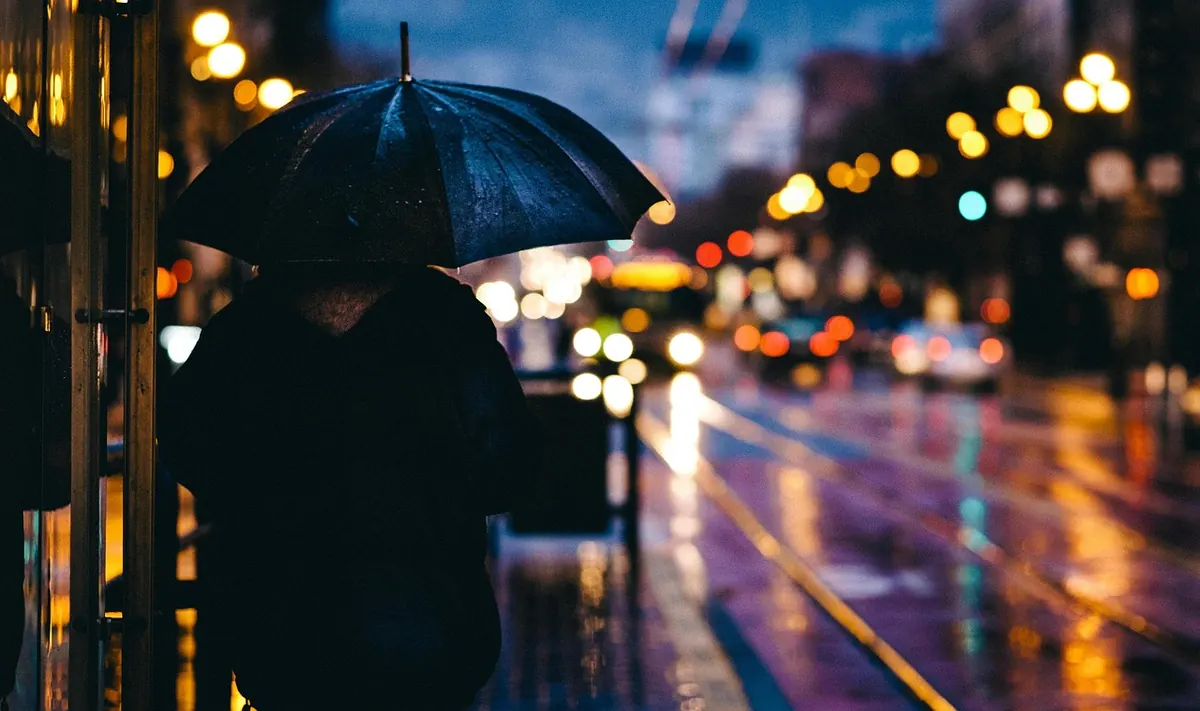
- Rain: distinguish light drizzle from sustained rain, and always consider it alongside temperature. Drizzle at 18°C is a costume problem; steady rain at 9°C is a hypothermia problem, particularly for young performers in thin shoes.
- Wind: read speed and, more importantly, gusts, on site with a handheld anemometer at head height near your tallest structure. In a wood, the risk is rarely your set blowing over — it is deadwood coming down.
- Lightning: if you can hear thunder, suspend. A common rule of thumb is to wait thirty minutes after the last thunder before resuming; adopt a version of it and apply it without debate.
- Heat: temperature plus humidity plus radiant heat in a clearing with no breeze. A shaded 28°C is not the same working day as an exposed 28°C.
- Ground: saturated soil, mud on the audience rake, slick boardwalks, standing water over cable runs.
Two tiers work better than one. Amber means adapt: shorten the interval, cut a scene that sits under the most exposed tree, move the box office under cover, ask the audience to wear waterproofs. Red means stop. No single red condition gets averaged against three green ones — one red number ends the conversation. Write that sentence down and mean it.
Read the site, not just the forecast
The forecast is for a town, not for a bowl of trees. Wind funnels down a ride and turns a calm clearing into a wind tunnel at the entrance path; rain finds the one section of trail that turns to grease. Walk the site at least once in genuinely bad weather before you open. You will discover drainage you did not know about, and you will find the bench that sits beneath the branch that moves.
Tree safety is a separate discipline
Commission a walkover by a qualified arboriculturist before the season and again after any significant storm, mark exclusion zones on the ground plan, and brief stewards on where they are. Do not let crew shelter under the biggest oak because it is convenient. Canopy is not a roof, and it is certainly not lightning protection. If your insurer or the site owner has requirements in writing, read them before the get-in, not after an incident.
Shelter that actually works in a wood
Separate shelter for the audience from shelter for cast, costumes and kit — they have different jobs. Audience shelter mostly needs to do one thing: get people out of the rain for ten minutes without creating a crush at a narrow point.
- Rigid roof or tensile canopy: effective, but it needs engineered anchoring. Tying a loaded line to a tree is tempting and unreliable; trees move, bark compresses, and the load can damage the tree you were trying to protect.
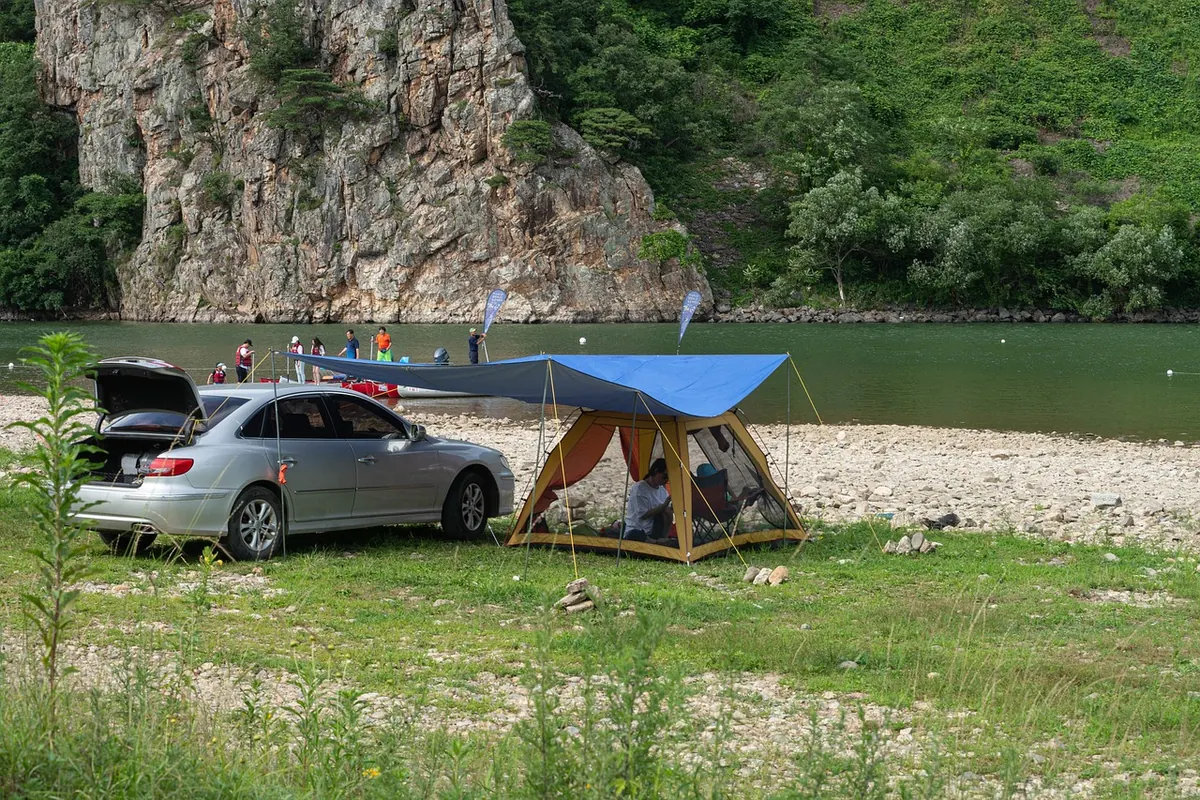
- Marquees and gazebos: weight them properly, never simply peg them into leaf litter, and know the manufacturer's wind limit. Take them down at your amber threshold, not after the frame has folded.
- Natural shelter: a dense evergreen stand cuts driving rain, but it also drops debris and hides what is happening above.
- Indoor fallback: identify the nearest hall or barn, time the walk, name who unlocks it, and decide in advance whether a move counts as a relocation or a cancellation.
Sweat the small stuff too: a dry box for scripts, a clothes rail, towels and spare socks, bin bags for wet costumes, a tarp over the sound desk, cable ramps on every path, and a printed number for the person who owns the nearest gate.
The decision clock, and who calls it
Naming times removes a great deal of argument. Review the forecast forty-eight hours out. Confirm at twenty-four hours whether the set gets built. If conditions look doubtful, issue a first public message four hours before the show, even if it only says you are watching. Make the final call no later than one hour before gates. Appoint one named weather lead with the authority to stop, and a deputy for the day they are off site. The stage manager announces the call; nobody freelances.
Stopping mid-show
Mid-performance decisions are harder, so choose them in advance. Find a pause point in the script — a scene change, the end of a song — where a stop feels deliberate rather than chaotic, and tell the cast where it is. Agree a short phrase for the comms channel and rehearse the stop once. Time spent on this in the tech is time you will not spend improvising in the rain.
Telling people, and telling them early
Pick a single source of truth — a banner on your website with a timestamp — and point everything at it: the recorded phone line, the ticket platform's message, the social posts. Keep the wording identical everywhere.
- Four hours out: "We are watching the forecast. Tonight's performance is currently going ahead. We will update at 5pm."
- One hour out: "Tonight's performance is cancelled. Tickets transfer automatically to Sunday at 3pm, or can be refunded — reply to this message."
- On site: the same text on an A-frame at the car park and another at the trailhead, with a steward standing beside it.
- The next morning: a short email, under a hundred words, one link, no explanations that read like excuses.
State clearly what "we perform in light rain" means, so people can dress for it: waterproofs rather than umbrellas that block sightlines, sturdy shoes, a cushion. Audiences forgive weather. They do not forgive being told the show is on when it plainly is not.
Heat, cast care and the long afternoon
Heat is the quiet hazard, because nothing dramatic happens at the start. A 3pm get-in, in costume, in a clearing with no breeze, is a genuinely hard working day. Shift the schedule — build early, rest through the hottest hour, perform later. Put water refill points where cast, crew and audience can all reach them, and shade over the box office queue.
Costume choices matter more than they seem: layers that come off between scenes, wigs off at the interval, nothing heavy and synthetic in direct sun. Shorten intervals or add one. Let the audience leave and re-enter. Keep a cool, shaded space open for anyone who needs it, staffed by a named first aider, with a log of anyone feeling unwell and medication kept out of the sun. For any cast or crew member with an existing health condition, have the plan reviewed with a qualified first aider or their clinician; that is not a call for a producer to make on the day.
A two-page plan, taped inside the box office
Keep it short enough that people read it. Page one: thresholds, decision times, names and phone numbers, shelter locations, evacuation routes, the comms phrases. Page two: the exact wording of the four public messages, ready to copy. Laminate it, put one in the box office and one in the stage manager's folder.
Then brief it out loud. A five-minute walk to the actual exit routes at the first call is worth more than a document nobody opens. Re-check the numbers each season — the tree that was sound last spring may have a crack now — and re-read what your insurer and site owner ask of you. The sky will do what it does. What you control is whether the decision has already been made.
Photo: Pexels / Pixabay